
Binding wire is often treated as a low-value construction supply, yet a small difference in diameter, softness, coil weight, surface condition, or packing can create a large problem on site. The wire may be difficult to twist, break too easily, feel inconsistent from coil to coil, stain nearby goods, arrive with corrosion, or take too much time to sort and issue from the warehouse. The purchase price is only one part of the result.
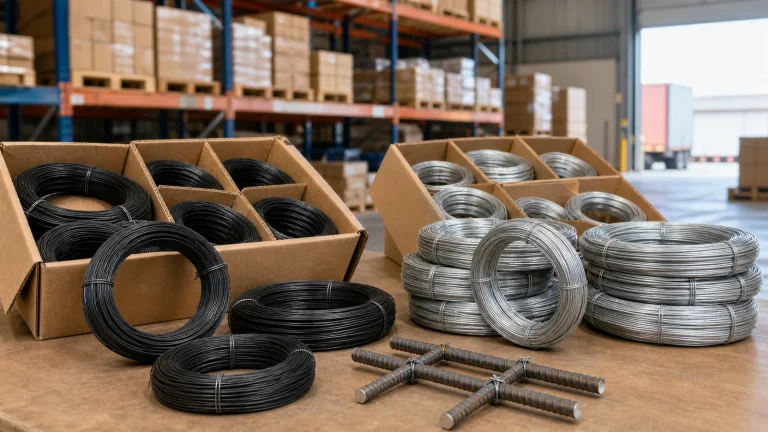
For construction-material distributors, hardware wholesalers, concrete contractors, farm supply channels, fencing buyers, and mixed-container importers, binding wire is a useful repeat item. It can be used for tying reinforcing steel, bundling materials, general site tying, farm and fence work, and local repacking. The best specification depends on the job, the user habit, and the way the product will be sold or issued.
A dependable order separates application, wire diameter, material and finish direction, coil weight, coil form, tie-wire or bundle method, packing, moisture protection, and inspection points. This makes quotations meaningful and gives the buyer a clear basis for comparing approved samples with the delivered lot.
Start with the application, not a generic wire description
The phrase binding wire can describe several different purchase needs. A contractor tying reinforcement needs wire that is practical to twist, manageable in the hand, and consistent through the coil. A distributor may need a common coil format that warehouse staff can issue quickly. A farm or fencing buyer may place more emphasis on finish and outdoor storage. A retailer may need smaller coils, clear labels, clean appearance, and cartons that can go directly to the shelf.
Before requesting a quotation, the buyer should define the actual use: reinforcement tying, general construction binding, farm work, fence-related work, bundling, or resale in small coils. The destination market, expected storage conditions, and preferred coil size are also relevant. A coil suitable for a construction yard may not be the right product for a clean retail pack.
This avoids a common error: comparing several offers described only as “binding wire” even though the diameter, finish, coil weight, and ductility are not the same. A lower-priced coil can have a different usable length, a different handling feel, or a different exposure risk from the product the buyer expected.
Wire diameter must be stated and checked with a tolerance
Diameter is one of the clearest specifications in a binding-wire order. It affects coil length at a given weight, strength, flexibility, twisting behavior, handling feel, and the amount of material a buyer receives. It should be stated in the order rather than inferred from a familiar trade name or a supplier photo.
A buyer should agree on the nominal diameter and a practical tolerance appropriate to the product grade. The inspection plan should require checks from more than one coil and should record the sampling points. A wire that is consistently smaller than expected may offer more length per kilogram but can change the way users judge strength and workability. A wire that is larger than expected may be harder to twist and gives fewer usable meters at the same coil weight.
The right diameter is not always the thickest option. It should match the task and the user. The useful question is whether the wire meets the agreed specification and works as expected in the target application, not whether a coil looks substantial when held in the warehouse.
Annealed and galvanized wire solve different problems
Black annealed binding wire is commonly chosen when pliability and easy tying are important. The annealing process is used to make the wire more workable, but the buyer still needs to confirm that the finished wire is consistent enough for the intended use. Excessive surface residue, uneven appearance, or an overly stiff coil can create handling and customer complaints.
Galvanized binding wire is usually selected when a brighter finish or better corrosion resistance is needed for the storage and application conditions. Galvanizing is not a substitute for sensible handling. Scratches, poor packing, trapped moisture, and long storage in unsuitable conditions can still affect the appearance and protection of the wire. The required finish should be linked to the market, expected exposure, and sales channel.
The order should specify which finish is required and should not allow a supplier to treat black annealed and galvanized coils as interchangeable. Buyers should also define whether a practical surface variation is acceptable, what condition is unacceptable, and how the coils will be protected during transit and storage.
Coil weight determines usable quantity and warehouse handling
Coil weight affects the quantity of wire per package, carton weight, labor at the job site, warehouse picking, and the number of coils a buyer can sell or issue. A coil that is too heavy may be inconvenient for field teams and smaller retail customers. A coil that is too light may raise handling cost or create an unexpected number of units to manage.
Importers should specify nominal net coil weight, acceptable weight tolerance, piece count per carton, and the expected gross carton weight. When a shipment contains mixed coil weights or finishes, every carton should be clearly separated and marked. The receiving team should not have to distinguish black annealed and galvanized stock by opening cartons and looking at every coil.
Coil form also matters. The winding should be compact and stable enough for normal handling, but the wire should pay out in a practical way. Loose winding, damaged tie wires, crushed coils, or sharp protruding ends create unnecessary loss and handling risk. A buyer can check a sample coil by opening it carefully and observing whether the winding remains manageable.
Surface condition and rust prevention need a realistic standard
Binding wire can be exposed to humidity at the factory, in the container, at the port, and in the destination warehouse. The buyer should define the condition expected on arrival rather than accepting a vague promise of “good quality.” For black annealed wire, the concern may be excessive oil, loose residue, visible corrosion, or staining. For galvanized wire, the concern may be coating appearance, white corrosion products, scratches, or moisture marks.
Moisture protection should fit the route and storage period. A practical plan can include suitable inner protection, dry cartons, stable pallets, container preparation, and sensible use of moisture-control materials where necessary. The goal is not to wrap every coil in unnecessary plastic. The goal is to prevent water exposure, abrasion, and condensation from ruining a basic but valuable shipment.
Buyers should also consider where the coils will sit after arrival. A dry covered warehouse and an open site store create different risk. The packing and finish should support the actual supply chain, not only the factory loading photo.
Quality control should test the wire and the coil
A useful inspection starts with model identity, finish, wire diameter, coil weight, winding condition, tie-wire condition, surface appearance, carton count, carton strength, and marks. Each point is simple, but together they prevent the most common receiving problems. The buyer should inspect more than one carton and more than one pallet position because small coils can vary across a production lot.
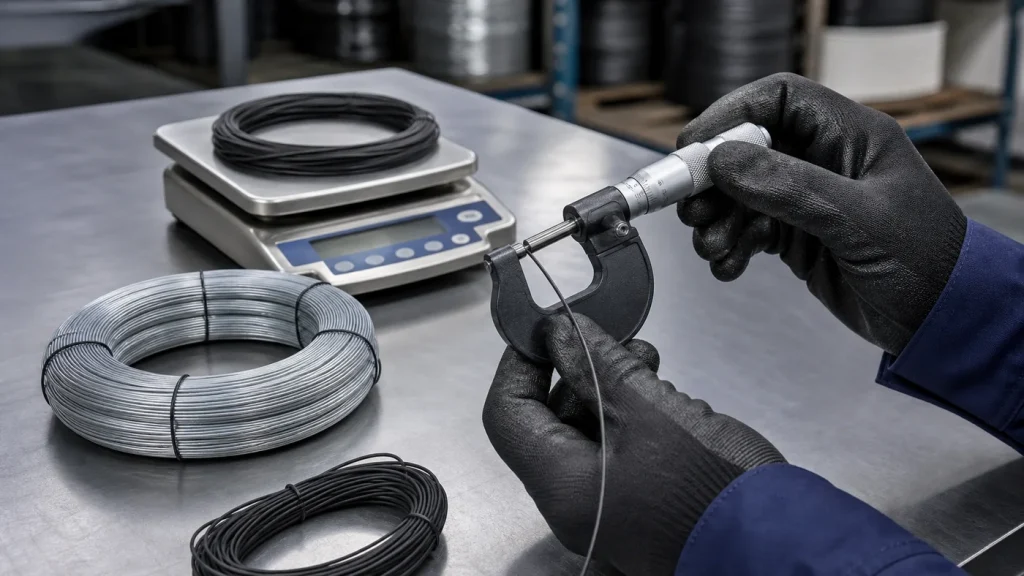
Diameter should be measured with a suitable tool rather than estimated by eye. Net coil weight should be checked against the agreed format. A visual review should look for obvious rust, coating irregularity, crushed coils, loose loops, broken ties, and sharp exposed ends. The inspection record should show the model, finish, sample location, and carton reference.
For a repeat program, the importer can keep an approved coil as a benchmark and retain basic records by batch. This makes later discussions more objective. It is easier to identify gradual drift in diameter, weight, winding, or surface condition when there is a known approved reference.
Packing should protect the coil and make receiving efficient
Small wire coils can be dense and surprisingly heavy in a carton. The master carton must be strong enough for the actual gross weight and for the stacking planned in transit. Inner separation or dividers can prevent coils from rubbing, tangling, or moving during handling. The packing should hold the coil shape without making it difficult for warehouse staff to remove individual units.
For pallet shipments, carton arrangement, stretch wrap, corner protection, and stable stack height should be planned before loading. Coils and cartons should be grouped by diameter, finish, and coil weight. Clear item marks reduce errors at the destination, especially when a buyer imports several wire products, mesh rolls, nails, or other construction supplies in one shipment.
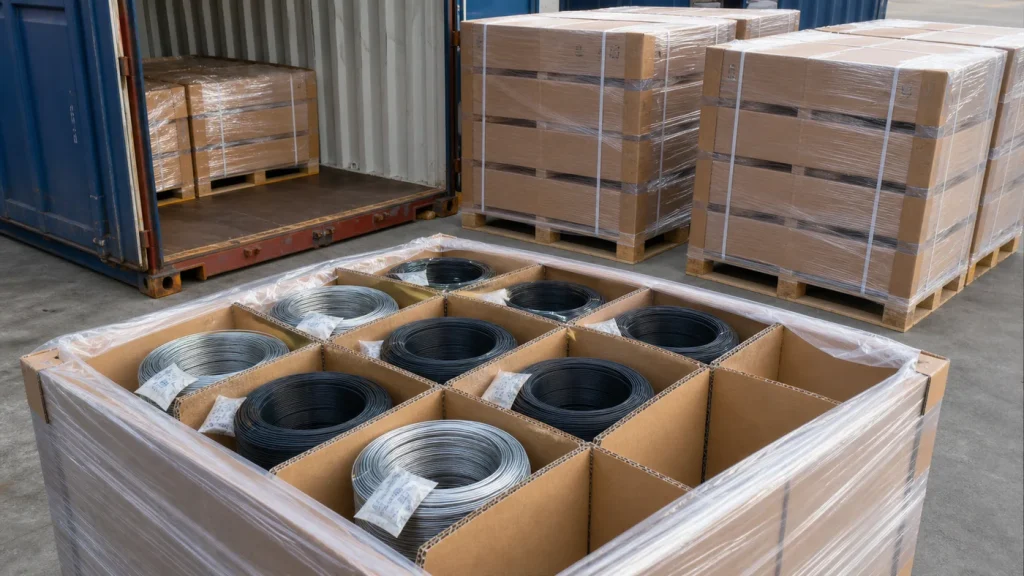
Container planning matters because binding wire is dense. The shipment may approach a practical weight limit before it uses all cubic space. Buyers should confirm gross weights, pallet weights, loading sequence, and the unloading capacity of the destination warehouse. In a mixed container, dense wire cartons should be positioned so they do not crush lighter cartons or retail packaging.
Construction, wholesale, and retail channels need different assortments
A construction-material distributor may prefer a short list of common diameters and coil weights that site customers recognize. A hardware wholesaler may need both black annealed and galvanized options, grouped in efficient trade cartons. A retail buyer may need smaller, cleaner coils with barcode-ready packaging and a more controlled shelf appearance. These are different sourcing programs even when the material is described with the same product name.
Importers can build the assortment by separating finish, diameter, coil weight, and channel. A focused range is easier to quote, inspect, store, and reorder than a long list of near-duplicate coils. The buyer should select the few formats that match local usage and then keep the specification stable through repeat orders.
Binding wire can also be a practical part of a wider construction-hardware order. It works best when dense cartons are planned with product weight, warehouse workflow, and the final sales channel in mind. The aim is not to fill a container with every wire-related item. The aim is to create a combination that can be received, sorted, sold, and reordered efficiently.
A clear order sheet reduces avoidable claims
A strong order sheet should record application, finish, nominal wire diameter, tolerance, nominal net coil weight, weight tolerance, coil form, tie method, piece count per carton, gross carton weight limit, inner protection, pallet plan, carton marks, destination storage conditions, and inspection points. It should also state whether the buyer expects black annealed wire, galvanized wire, or more than one finish in the shipment.
The critical points should match the market. For a construction coil, diameter, workable twisting behavior, coil weight, and carton strength may be the main priorities. For a galvanized retail coil, surface appearance, coil shape, label position, and clean packaging may carry more weight. For a mixed construction container, pallet distribution and total shipment weight deserve early attention.
Binding wire becomes a reliable repeat product when importers treat it as a controlled supply item rather than a generic coil. Clear diameter and finish requirements, practical coil checks, moisture-safe packing, and realistic handling plans keep a low-cost product from becoming a costly logistics or customer-service problem.