
Diamond cutting blades are small compared with many hardware products, but they carry high sourcing risk. A blade that looks acceptable in a carton can still fail the buyer if the rim type, segment bond, arbor size, material application, packaging, or safety information does not match the market.
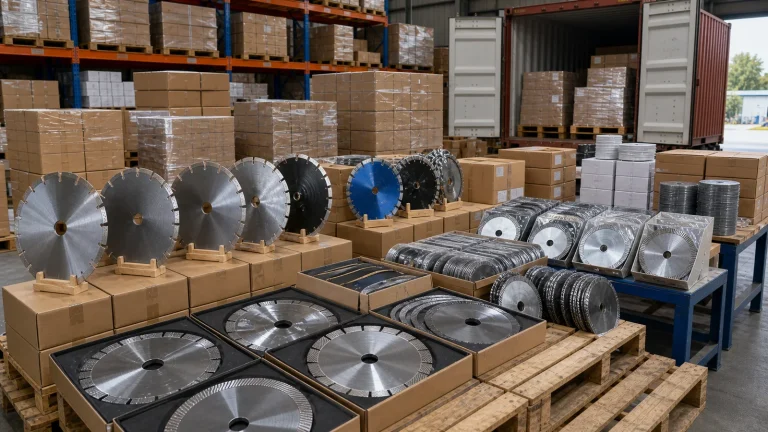
For importers, distributors, construction supply channels, tile stores, stone-tool sellers, and hardware retailers, the goal is not to buy one generic blade. The goal is to build a blade range that matches real users: tile installers, concrete cutters, stone fabricators, general contractors, repair shops, and retail buyers.
This makes diamond blade sourcing different from many basic hardware items. The product is judged by cutting behavior, life, safety, packaging, and repeat consistency. Price matters, but a low price cannot compensate for the wrong blade type or unstable batch quality.
Start with the material being cut
The first sourcing question should be the application. A blade for ceramic tile is not the same as a blade for concrete, granite, marble, brick, asphalt, or general masonry. The rim shape, segment design, bond, diamond concentration, and cooling behavior all need to match the material and user expectation.
A buyer should define the main use cases before selecting SKUs. A retail hardware program may need common sizes for general masonry and tile work. A construction distributor may need stronger concrete and asphalt blades. A stone-tool buyer may require cleaner cutting, better finish, and more careful batch control.
If the product line is not organized by application, the catalog becomes confusing. Users may choose the wrong blade, complain about cutting speed or life, and blame the importer even when the real problem was poor product matching.
Rim type is a product-positioning decision
Segmented blades, turbo rim blades, and continuous rim blades serve different user needs. Segmented blades are often chosen for faster cutting and heavier masonry or concrete work. Turbo rim blades can balance speed and finish in many general applications. Continuous rim blades are often used where a cleaner cut is important, especially in tile and similar materials.
These categories should not be treated as decoration. Rim type affects heat control, debris removal, edge quality, cutting speed, vibration, and user confidence. Importers should connect each rim style with the intended material and sales channel.
A practical assortment may include a few core diameters and rim types instead of too many similar-looking SKUs. For example, a buyer might separate general masonry blades, tile blades, concrete blades, and premium contractor blades. This makes ordering, packaging, and retail selection easier.
Size, arbor, and machine fit must be exact
Diameter and arbor size are basic checks, but they are also common sources of mistakes. The buyer should confirm blade diameter, bore or arbor size, reducer ring requirements, segment height, segment thickness, core thickness, maximum operating speed marking, and machine compatibility requirements for the destination market.
Inconsistent arbor fit can turn a technically good blade into an unsellable product. A blade may also need different packaging or labels depending on whether it is sold for angle grinders, circular saws, tile saws, masonry saws, or specialty cutting equipment.
Importers should treat the size chart as a control document. Every diameter, arbor, rim type, and pack style should be checked against the buyer’s catalog and destination-channel needs before production.
Quality control should cover more than appearance
Visual inspection is necessary but not enough. The buyer should check diameter, arbor size, rim geometry, segment height, segment attachment, core flatness, surface finish, balance, packaging fit, and batch consistency. For higher-risk products, performance sampling against intended materials may also be needed.
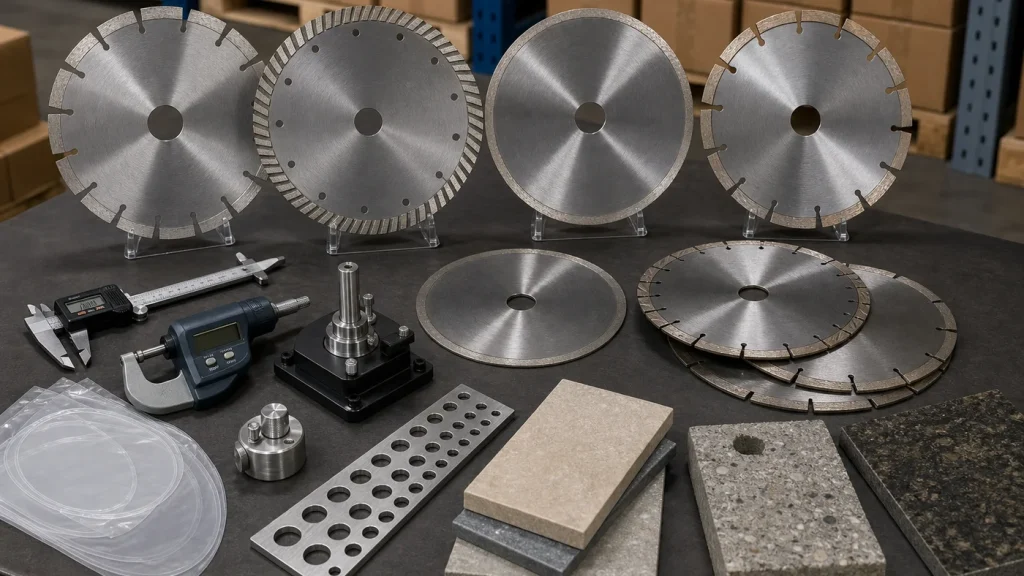
Batch control is especially important. A clean sample from the supplier does not prove that a full shipment will match. Importers should define how many cartons or pallets are checked, which sizes are sampled, and how the inspection team records rim condition, flatness, size, and packaging.
Blades should also be protected during inspection and repacking. Scratched surfaces may not always affect performance, but poor handling creates a weak first impression for retail and distributor buyers.
Safety information and market compliance cannot be ignored
Diamond cutting blades are rotating cutting products. Importers should verify that packaging and labels provide the safety information expected in the destination market, including appropriate use, machine fit, protective equipment warnings, speed information, wet or dry use guidance where relevant, and any required local compliance marks or documentation.
Requirements can vary by market and product category, so the buyer should not rely on a generic carton design. A label that works for one country, sales channel, or application may be incomplete for another. Safety information should be reviewed before mass printing, not after the shipment is packed.
This is also a brand-protection issue. Even when the product is sold through distributors, end users often judge quality from packaging clarity. Confusing information increases misuse, complaints, and return risk.
Packaging affects both protection and sales
Diamond blades can be packed in sleeves, blister cards, color boxes, plastic cases, or bulk cartons depending on the buyer channel. A contractor distributor may prioritize strong protection and easy warehouse sorting. A retail chain may need hang-ready packaging, clear size identification, barcode position, and shelf appeal.
Protective packing should prevent blade movement, edge damage, carton abrasion, moisture exposure, and mixed-size confusion. Heavy cartons should be sized for real handling. Pallets should be stable, and cartons should be grouped by SKU so the receiving warehouse can sort quickly.

If the shipment includes many blade sizes and rim types, carton marks and inner separation become more important. A warehouse team should not need to open many cartons to identify which blade is inside. Clear packing logic reduces labor cost after arrival.
Build the assortment around real buyers
A strong diamond blade line does not need to start with every possible SKU. Importers can begin with a focused assortment: common diameters, clear application groups, a sensible split between economy and contractor-grade options, and packaging that fits the sales channel.
For hardware retailers, the range may need simple application choices and clean retail packs. For construction distributors, durability, repeat supply, and carton handling may matter more. For stone and tile channels, finish quality and application-specific selection become more important.
This buyer-channel logic helps avoid a common mistake: ordering many similar blades that compete with each other but do not solve distinct customer needs. A smaller, clearer range can sell better than a large confusing range.
A practical sourcing plan reduces claim risk
Diamond cutting blade sourcing should connect product use, rim type, size range, packaging, safety information, and inspection into one plan. If these controls are separated, the buyer may receive a product that looks acceptable but fails in the market.
The practical order process should confirm application, rim style, diameter, arbor, material suitability, packaging, carton plan, sample approval, inspection checklist, and batch control before production finishes. This gives the buyer a stronger chance of repeat sales and fewer after-arrival problems.
For hardware importers, diamond blades can be a valuable category because they serve contractors, installers, repair users, tile channels, stone channels, and hardware retail. But the category rewards clarity. The right blade, clearly positioned and properly packed, is far easier to sell than a generic blade selected only by price.