
Hardware looks simple from the outside: screws, hinges, locks, hand tools, brackets, handles, fittings, and boxed building supplies. In real procurement, the category is difficult because demand is fragmented. A buyer may need many small-to-medium SKUs, but not enough volume of each single item to justify a full container.
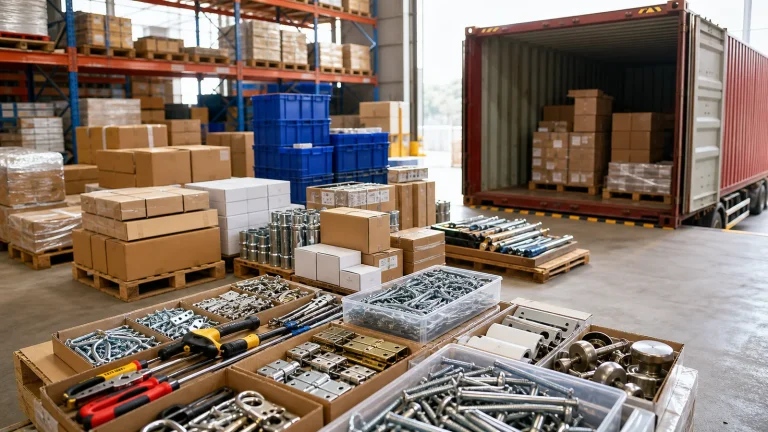
This is why one-stop hardware sourcing matters. It is not only a convenience service. For many importers, distributors, retailers, and project suppliers, it is the difference between a workable replenishment plan and an expensive container filled with one product that moves too slowly.
The problem with single-item container buying
A single product, by itself, often creates pressure. If the buyer orders one full container of only one screw size, one hinge model, one lock set, or one tool category, the shipment may look efficient on paper because the unit price is lower. But the business may then carry too much inventory in one narrow SKU.
That pressure shows up in several ways:
- Cash is locked into one product. The buyer pays for a large quantity before the market has proven repeat demand.
- Warehouse space is consumed by slow-moving stock. Hardware items can be dense, heavy, and difficult to reorganize after arrival.
- Product range stays too narrow. A retailer or distributor may need a broader catalog to serve customers, but the full-container model pushes them toward fewer SKUs.
- Reorder timing becomes awkward. Some items sell quickly, while others remain in storage, making the next purchase harder to plan.
In hardware sourcing, a low factory price is only one part of the cost. Inventory risk, storage cost, capital pressure, and the lost opportunity to sell related items can be just as important.
Why mixed hardware orders fit the category better
Hardware is naturally a basket category. A customer buying door hardware may also need screws, anchors, handles, hinges, drill bits, measuring tools, brackets, and packaging accessories. A building supply distributor may need hundreds of small items that support the same contractor channel. A retailer may want a balanced shelf range rather than one large pile of a single product.
A one-stop sourcing model allows the buyer to combine multiple product families into one procurement plan. Instead of pushing one item into a full container, the buyer can build a practical mix: fast-moving core items, test quantities for new SKUs, seasonal or project-based products, and supporting accessories.
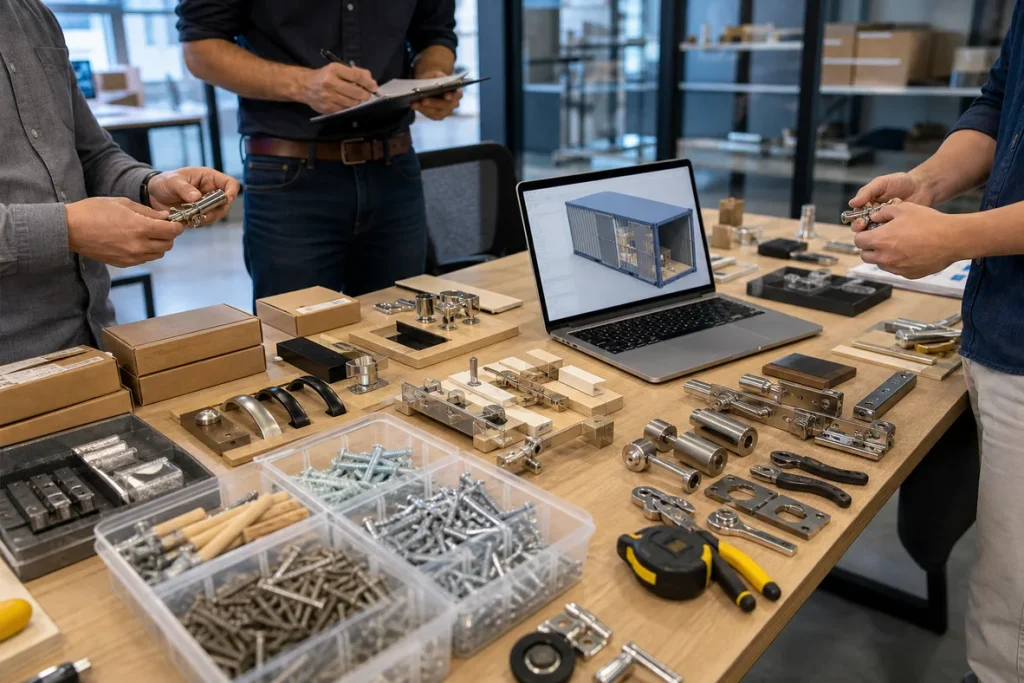
This approach is especially useful for new importers and growing distributors. They can test a wider range without overcommitting to a single item. The first shipment becomes a market-learning shipment, not only a stock purchase.
Lower logistics cost is not only about freight rate
Shipping cost is a major reason buyers look at one-stop procurement. When different hardware items are sourced separately from multiple factories, each order may carry its own minimum quantity, domestic trucking cost, export handling cost, documents, and communication work. Even if each supplier offers a reasonable unit price, the total landed cost can rise quickly.
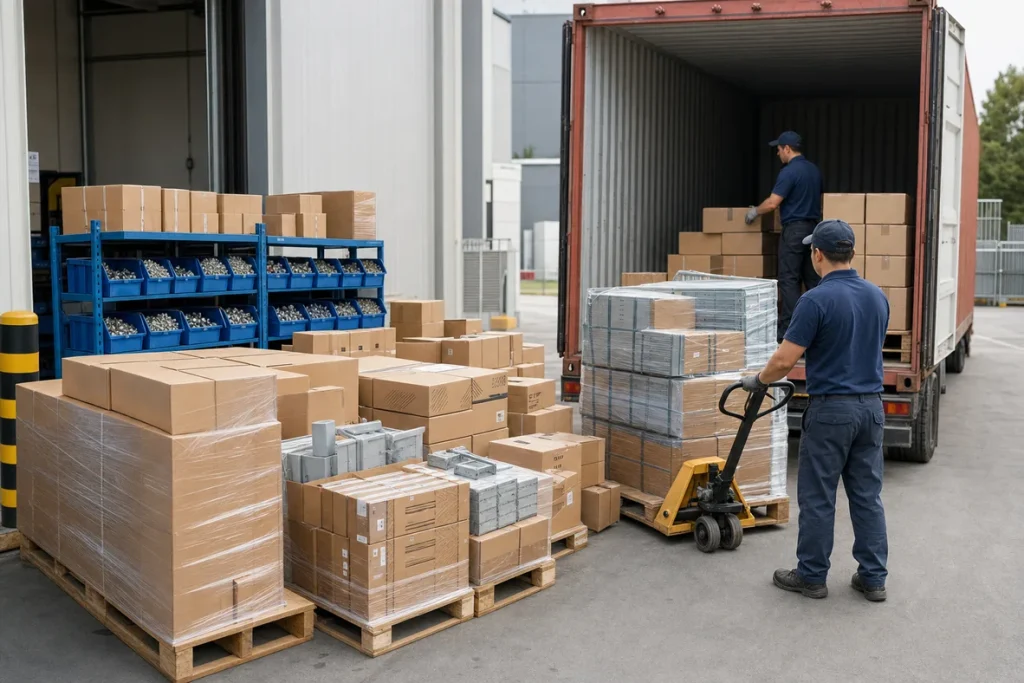
Combining products can reduce waste in the logistics chain. Cartons can be staged together, container space can be planned more carefully, and low-volume SKUs can share the shipment with heavier or faster-moving products. For ocean freight, the buyer is not only paying for the container; the buyer is paying for how well that container is used.
A mixed container also helps balance weight and volume. Fasteners and metal fittings are heavy. Tool sets, packaging, handles, and some building accessories may use more space but carry less weight. A practical loading plan can combine dense and bulky goods so the shipment uses both weight allowance and cubic space more effectively.
One-stop sourcing also reduces management cost
The visible cost is freight. The hidden cost is management. Hardware sourcing requires sample approval, material checks, finish confirmation, packaging artwork, carton marks, inspection scheduling, supplier follow-up, payment timing, and export documents. When every small item is handled separately, the buyer spends too much time coordinating details that could be managed under one purchasing plan.
A one-stop model can simplify that work. The buyer still needs product-level control, but the order can be organized through one consolidated schedule. This helps reduce communication gaps between factories, trading teams, inspection partners, forwarders, and the buyer.
Where one-stop hardware sourcing works best
This model is not the right answer for every purchase. If a buyer already sells a very high volume of one standardized item, direct full-container buying from a specialized factory may be the best route. But one-stop sourcing is often stronger when the buyer needs category breadth, smaller trial orders, faster catalog building, or a balanced container.
It works especially well for:
- new hardware importers building their first product range;
- regional distributors that need mixed stock for contractors and retailers;
- ecommerce sellers testing related SKUs before scaling;
- project suppliers combining installation hardware, tools, and accessories;
- retail chains that need shelf-ready variety instead of single-item bulk.
The practical goal: a better container, not just more products
One-stop procurement should not mean randomly adding products to fill space. The goal is to build a better container: a shipment where each SKU has a reason, the mix supports the buyer’s sales channel, the packaging fits the destination market, and the logistics plan reduces unnecessary cost.
For the hardware industry, this is the key point. The buyer does not always need the cheapest single item. The buyer often needs the most workable sourcing structure. A well-planned mixed shipment can lower freight pressure, reduce inventory risk, improve product range, and make the first order easier to sell through.
That is why one-stop hardware sourcing is becoming an important model for global buyers. It matches the way hardware is actually sold: not as one isolated product, but as a connected range of useful items moving through the same distribution channel.