
Private-label packaging is not only a graphic exercise. For hardware importers, it is the operating system that connects a product, its SKU, the inner pack, the master carton, the pallet, and the receiving warehouse. A good box or bag needs to protect the product, identify it correctly, support the sales channel, and still survive loading and delivery. A poor packaging plan can turn otherwise correct tools, wire products, and fasteners into a sorting, damage, and claim problem.
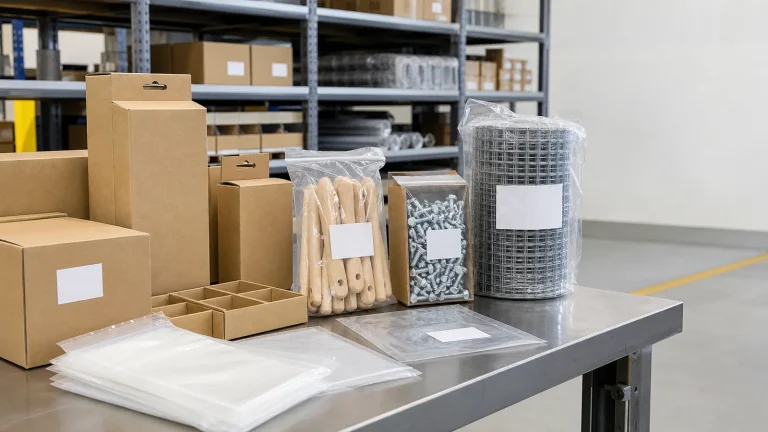
Buyers should approve packaging as a controlled specification. That means defining the exact SKU, product identity, consumer or trade pack, quantity, carton construction, required marks, barcode or label placement, carton quantity, gross-weight limit, pallet plan, and inspection points. A logo file alone does not answer these operational questions.
Start with a SKU architecture that the warehouse can use
Each sellable item needs a unique and stable SKU that is linked to its actual product configuration. A handle length, wire-roll opening, fastener size, finish, pack count, or carton quantity can create a new SKU when it changes the product the customer receives. Do not use one label for several near-identical variants and expect the destination warehouse to separate them later.
The SKU record should state the product description, dimensions or model, pack count, inner-pack type, master-carton quantity, net and gross weight, carton size, and approved artwork or label reference. This lets the supplier, inspector, freight team, and receiving staff work from the same identity.
Match the inner pack to the product and channel
Small fasteners may need sealed bags, small boxes, or counted trays. Long handles need sleeves, end protection, and bundles that prevent surface damage. Wire rolls need edge and moisture protection without losing the ability to identify opening and size. A retail pack should protect the product, give the buyer a clean presentation, and allow practical shelf handling. A trade pack may prioritize quantity, weight control, and warehouse speed.
Do not force every product into the same packaging format. A carton that works for dense fasteners can be unsuitable for a lightweight long handle or a roll of wire. The packaging decision should follow product shape, weight, abrasion risk, customer channel, and destination handling.
Define what belongs on a label and on a carton mark
Labels and carton marks should support identification without creating ambiguity. Buyers commonly need the SKU, product description, variant, quantity, carton number, destination handling information, and any required barcode placement. The exact fields depend on the market and channel, but the approved layout should identify where each element appears and how it is checked. Leave enough clear space and contrast for scanning rather than placing a code across folds, seams, or rough surfaces.
Artwork approval should include a print proof or physical packing sample. Inspect color, placement, orientation, adhesion, and legibility at normal receiving distance. A correct digital file does not guarantee correct production placement on a bag, box, carton, or sleeve.
Approve the full pack hierarchy, not just one retail box
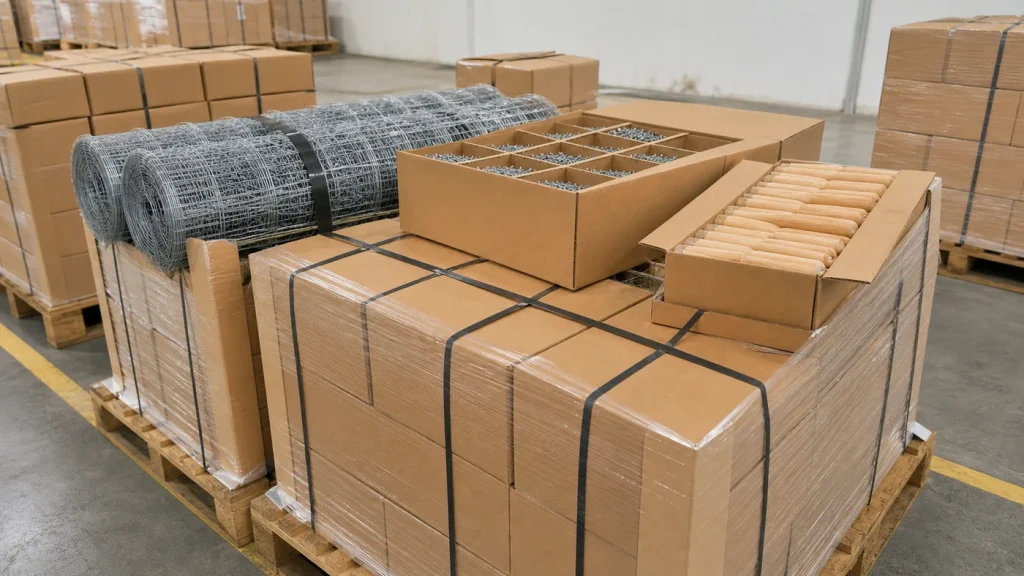
Private-label approval should move from product to inner pack, master carton, pallet, and container grouping. The buyer needs to see how many inner packs fit in a carton, whether dividers prevent rubbing, how carton weight is controlled, how cartons stack, and whether the pallet footprint is stable. A polished retail box can still fail if its master carton crushes or if cartons cannot be picked efficiently at destination.
For mixed loads, each pallet or clearly separated pallet zone should keep compatible SKUs together. Dense cartons should not crush lighter cartons, long components should be protected from overhang damage, and roll goods should be restrained against movement. The loading plan needs to reflect the receiving sequence as well as freight efficiency.
Inspect count, sealing, labels, and carton fit before shipment
A packaging inspection begins with identity: correct SKU, product, variant, and approved pack. Then check unit count or net weight, bag or box closure, divider placement, label position, barcode scan where relevant, master-carton quantity, carton dimensions, gross weight, carton strength, pallet restraint, and visible shipping damage. Sampling should include items from multiple cartons and pallet positions.

Photographs should show the exact approved pack and the checks being performed. This record helps the destination warehouse compare the shipment with the packing standard and makes future repeat orders easier to control.
Plan receiving before the cartons leave the factory
The destination team needs a receiving list that reflects the shipment: SKU, expected cartons or bundles, inner-pack quantity, pallet count, gross weight, and location or sequence where useful. If a mixed shipment arrives without a usable packing list and clear carton identification, the warehouse spends time opening cartons, recounting, and isolating products that should have been grouped at origin.
Carton and pallet design should also reflect the real unloading equipment. Confirm safe lifting weights, pallet access, stack height, wrapping, corner protection, and how rolls or long bundles will be stored. Packaging is successful only when the goods can be received and sold without avoidable rework.
Use a packaging sign-off sheet for every new program
A complete packaging sign-off should include the SKU, approved product sample, inner-pack style and count, label or artwork file and placement, barcode test if required, master-carton quantity, carton dimensions and gross-weight limit, divider and protection requirement, pallet plan, marks, packing-list fields, and inspection photos. It should also record which details are critical for retail, wholesale, or warehouse receiving.
Private-label hardware packaging becomes dependable when it is treated as a supply-chain specification. Clear SKU control, product-appropriate inner packs, approved carton hierarchy, measurable inspection, and receiving-ready pallet grouping protect the brand and reduce operational cost after the shipment arrives.