
Roofing nails may look like a simple fastener, but they are purchased for a very specific job: securing roofing materials while supporting a practical installation and supply program. A wrong head shape, inconsistent length, unsuitable shank, weak coating, mixed cartons, or poor inner packing can cause trouble long before the product reaches a roof. For importers, the important question is not only the price per carton. It is whether the nail matches the material, the installer, the channel, and the way the goods will be received.
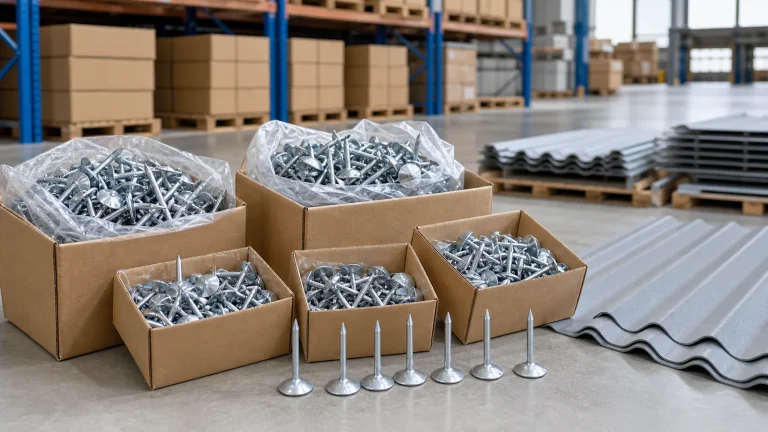
For roof-material distributors, building-material wholesalers, hardware importers, retail chains, and mixed-container buyers, this category can be a dependable complement to sheet, accessory, and construction-hardware ranges. It is also a dense product with specific quality and packing risks. The order should translate the intended roofing application into a measurable nail specification before production starts.
A dependable purchasing plan records the roof-material use, head profile and diameter, nail length, shank diameter and style, point, finish, packing format, carton weight, marks, and inspection points. With these details agreed early, suppliers can quote on the same basis and warehouses can receive the correct item without guesswork.
Start with the roofing material and installation scenario
Roofing nails with umbrella heads are selected because the wider head gives a larger bearing surface than a small common nail head. This can be useful for suitable sheet, felt, and other roofing-material applications where the fixing detail needs to spread load across the material. It does not mean one umbrella nail fits every roof system. Sheet profile, thickness, underlying structure, weather exposure, installation practice, and local building requirements all matter.
The buyer should first define what is being fixed and where the product will be sold. Is the nail for corrugated roofing sheets, roofing accessories, felt-like products, temporary structures, farm buildings, or a general hardware range? Is the customer a professional roofing contractor, a building-material dealer, or a retail buyer looking for small packs? These questions change the useful nail size, finish, packaging, and documentation expectations.
A generic request for roofing nails is too loose. A useful inquiry describes the target material, nail type, preferred dimensions, finish direction, packing weight, and destination market. This avoids comparing offers that look similar but are intended for different work.
The umbrella head needs a controlled diameter and profile
The head is one of the defining features of a roofing nail. Its diameter, dish or umbrella profile, thickness, centering, and finish affect how the nail bears against the roofing material and how the product looks in a wholesale or retail pack. A head that is too small, uneven, badly formed, or inconsistent across a carton may not match the approved sample or the customer's installation expectation.
Importers should include the nominal head diameter and a practical tolerance in the order. The head should be reviewed from the top and side for consistent forming, obvious sharp burrs, off-center shank attachment, and plating coverage. A clean sample photo is not enough; inspectors should take samples from more than one carton or production batch.
Head geometry is also a commercial point. Roofing-material distributors may need a visibly consistent head because installers and resellers judge the product quickly. Retail programs may need a clean presentation in transparent bags or small boxes. The specification should reflect both the fastening function and the expected sales channel.
Length, shank diameter, and point must match the application
Nail length and shank diameter influence penetration, holding behavior, carton weight, usable quantity, and installer handling. The buyer should state both values rather than relying on local trade terms or a carton label. Two nails described by the same familiar name can differ materially in length or wire diameter.
Shank style and point shape should also be confirmed. Depending on the product and market, roofing nails may be supplied with different shank directions or surface details. The buyer should not assume a particular shank simply because a supplier has a similar product image. State the approved style, verify it on the sample, and check that later production remains consistent.
A point that is visibly blunt, bent, irregular, or poorly centered can create handling complaints. A shank that varies from the agreed diameter can change the way the product performs and the number of pieces packed per kilogram. The goal is not to prescribe a nail for every substrate. The goal is to make sure the delivered nail matches the intended material and approved model.
Galvanized finish should be specified for the supply environment
Roofing nails are often ordered with a galvanized surface because roof-material supply chains can involve humidity, transport, open storage, and exposed construction use. The finish should be described clearly in the order, and the buyer should define the surface condition expected on arrival. Galvanizing helps with corrosion resistance, but it does not remove the need for sound storage and handling.
Inspection should look for uneven appearance, bare-looking spots, excessive roughness, visible damage from packing, moisture marks, and early corrosion. The exact acceptance standard will depend on the product grade and target market. The important point is that the whole batch is judged against an agreed finish direction rather than a vague statement such as “galvanized quality.”
Transit and destination storage affect the result. Condensation, wet cartons, abrasion, and long exposure in unsuitable conditions can reduce the appearance and protection of a finished nail. A sourcing plan should connect the finish, inner packing, carton design, pallet protection, route, and warehouse conditions.
Quality control should measure the head, shank, point, and finish
A practical inspection checklist should verify product identity, head diameter, head profile, nail length, shank diameter, shank and point condition, finish appearance, piece count or packing weight, inner bag condition, carton strength, carton marks, and pallet condition. These checks are straightforward, but they prevent many claims caused by mixed sizes or poorly packed dense goods.

Measurements should be taken from several samples, not a single selected piece. For packed goods, inspectors should sample from different cartons and pallet positions. Photos should show the exact model and packed product being checked. This helps a buyer compare the shipment with the approved sample and creates a useful record for repeat orders.
Quality control should include practical packing checks as well. A correct nail can still become a problem if inner bags tear, cartons split under weight, or mixed sizes are packed together. The shipment needs to remain identifiable and usable after it moves through loading, sea freight, unloading, and warehouse picking.
Inner packing and carton strength protect dense fasteners
Roofing nails are heavy for their volume. Weak inner bags can split, allowing loose nails to damage cartons and complicate warehouse handling. Weak master cartons can crush under pallet stacking or tear during unloading. A strong packing plan starts with the actual product weight and piece count, then selects inner bags, boxes, dividers, and carton construction that can survive the route.
Buyers should define the net weight or piece count per inner pack, inner packs per carton, gross carton weight limit, carton dimensions, pallet plan, and required marks. For retail programs, small consumer packs may need a different carton structure from trade cartons. For wholesale programs, repeatable weight and durable master cartons may matter most.
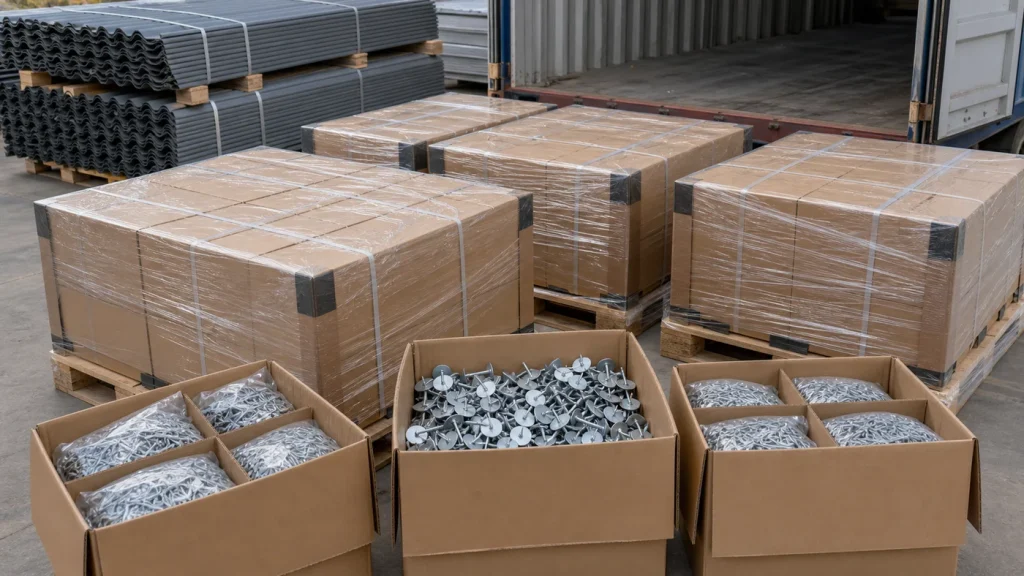
For mixed containers, dense nail cartons should be positioned carefully so they do not crush lighter roof accessories or retail packaging. Gross weight, pallet weight, loading sequence, and destination unloading equipment should be reviewed before the container is sealed. A container can reach a practical weight limit while still showing unused cubic space.
Build the assortment around roofing supply channels
A roof-material distributor may want a focused range of common sizes and carton formats that match the sheet and accessory range it already sells. A hardware wholesaler may need a combination of trade cartons and smaller packs. A retail chain may need clean, barcode-ready bags or boxes with consistent head appearance. These channels should not be served with one generic packing model.
Importers can build the range by separating nail length, head diameter, finish, and pack size. A focused set of fast-moving SKUs is usually easier to inspect, stock, and reorder than a large collection of near-duplicate sizes. Product selection should follow local installation practice and customer demand rather than factory convenience.
Roofing nails can also support a broader building-material or hardware container. Their dense weight can complement more volume-heavy roofing products, but the cargo plan needs to protect cartons and maintain realistic weight distribution. A controlled assortment gives the buyer a product line that can be received and sold with less sorting and fewer claims.
A detailed order sheet reduces avoidable errors
A strong order sheet should list the target roofing application, nail type, head profile, head diameter and tolerance, length and tolerance, shank diameter and style, point requirement, finish, inner-pack format, master-carton quantity, net and gross weight, carton dimensions, pallet plan, mark requirements, and inspection points. It should also state which features are critical for the buyer's market.
For a trade carton, length, shank diameter, finish, weight accuracy, and carton strength may be central. For a retail pack, head appearance, small-pack quantity, label space, and clean presentation may have more importance. For mixed roof-material shipments, weight distribution and pallet stability must be planned early.
Umbrella-head roofing nails become a dependable sourcing category when buyers treat them as a roof-supply product with a clear application, not as a generic fastener. Defined head geometry, accurate shank and length, appropriate finish, measurable inspection, and practical packing are what turn a carton of nails into a repeatable wholesale line.