
Steel strip and galvanized sheet are often treated as simple material purchases, but importers quickly discover that small specification differences can change the whole result. A shipment may look correct from the outside while thickness tolerance, edge condition, surface marks, coating protection, coil packing, or container weight creates problems after arrival.
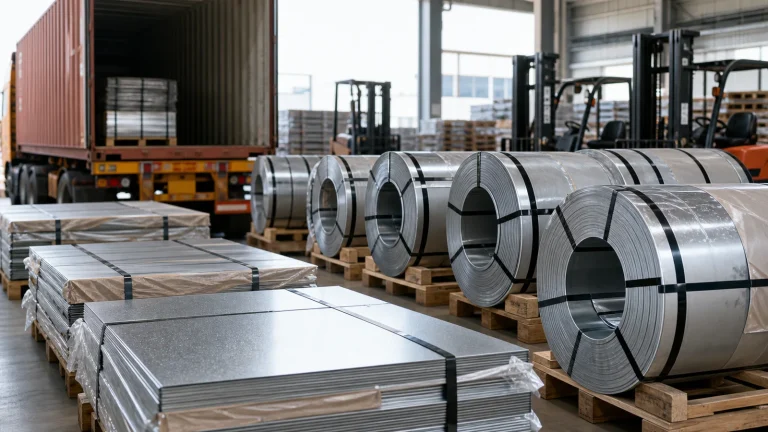
For hardware importers, steel service channels, building-material distributors, agricultural tool producers, stamping factories, and mixed hardware buyers, steel products are not only raw materials. They support many downstream items: brackets, tool parts, blade blanks, metal profiles, construction accessories, repair goods, shelving components, and local fabrication programs.
This means the buyer should not evaluate only the price per ton. The order needs a clear plan for material grade, thickness, width, sheet size, coil weight, surface finish, coating condition, edge quality, packing, unloading, and documentation. When these details are loose, the lowest price can become the most expensive option.
Define the product format before comparing suppliers
The first step is to separate the product format. Steel strip, narrow slit coil, cold rolled strip, galvanized steel sheet, spring steel strip, flat sheet, and coil stock may serve different buyers and machines. Even when the material family looks similar, the required tolerance, surface, edge condition, and packing method can be very different.
A distributor may want common sheet sizes that are easy to stock and resell. A stamping customer may care more about width accuracy, coil weight, and edge quality. A tool-parts buyer may need stronger material control and stable hardness. A construction hardware buyer may focus on coating, flatness, and rust protection.
Importers should write the order around the real application instead of using a vague description such as galvanized sheet or steel strip. A useful inquiry should list material type, thickness, width or sheet size, tolerance, surface requirement, coating or finish requirement, edge condition, packing style, order quantity, and destination handling needs.
Thickness tolerance is a commercial issue, not only a technical detail
Thickness tolerance directly affects product cost, resale confidence, processing behavior, and customer claims. If the steel is thinner than expected, end users may reject it or discount it. If it is thicker than planned, it may not fit downstream machines, dies, bending operations, or packaging calculations.
Buyers should define nominal thickness and acceptable tolerance before price comparison. The supplier should also clarify how thickness is measured, where it is measured, and whether the tolerance applies across the full width and length. For slit strip and sheet products, variation near the edge can matter as much as the center measurement.
A practical inspection plan should include thickness checks across multiple bundles, coils, or sheets. For repeat orders, importers can keep a measurement record by batch so that later disputes are not based only on photos or general impressions.
Width, length, coil weight, and coil ID affect downstream handling
For steel strip and coil products, width accuracy, coil inside diameter, outside diameter, coil weight, winding condition, and telescoping risk can affect unloading and processing. A coil that is too heavy for the buyer's warehouse equipment can create a real receiving problem even if the material itself is correct.
For sheet products, length and width tolerance, sheet squareness, stacking flatness, and bundle height need to match the warehouse and end-user channel. Oversized bundles may be difficult to handle; unstable stacks may arrive with bent corners or damaged edges.
Before shipment, the importer should confirm whether the buyer wants small coils, larger coils, sheet bundles, mixed sizes, or SKU-specific pallets. This is especially important when the shipment is part of a broader hardware purchasing program and the receiving team must sort many products at once.
Surface finish and coating condition require clear acceptance rules
Surface condition is one of the easiest areas to misunderstand. Galvanized steel may show spangle pattern, minor handling marks, oiling condition, passivation difference, or surface variation. Cold rolled strip may show scratches, stains, roller marks, or storage marks if handling is not controlled.
The buyer should define what is acceptable for the sales channel. A fabrication buyer may accept minor surface marks that do not affect processing. A retail or visible-use channel may need cleaner appearance. A buyer producing stamped or formed parts may care about scratches because they can remain visible after processing.
For galvanized products, coating consistency and storage protection are especially important. White rust, moisture marks, and edge oxidation can occur when packing or storage is poor. The order should specify whether oiling, passivation, protective film, paper interleaving, or special wrapping is needed for the destination route and storage time.
Edge quality can decide whether the material is usable
Edge condition is often overlooked until the buyer starts using the material. Slit edge burr, sharp edge, wavy edge, camber, edge cracking, or uneven trimming can create safety risk, machine stoppage, poor forming, or extra labor. For narrow steel strip, edge quality may be one of the most important inspection points.
The buyer should define the required edge type and acceptable burr level where relevant. If the material will be stamped, bent, punched, welded, or used for tool parts, edge quality should be tested before the full shipment is released.
Photos can help, but they are not enough. A pre-shipment inspection should include physical edge checks, straightness checks, and sample handling. If the buyer has a downstream die or machine requirement, the sourcing team should align the steel strip specification with that processing requirement instead of treating it as a standard commodity.
Quality control should combine measurement and batch traceability
Steel product quality control should not rely only on a clean supplier sample. Importers should check production batches, coil or bundle identification, material certificate availability, dimensions, surface, edge condition, packing condition, and loading plan. The goal is to confirm that the commercial shipment matches the approved specification.

Basic inspection points can include thickness, width, sheet length, coil ID and OD, coil or bundle weight, flatness, camber, burr, rust, white rust, oil condition, surface scratches, stains, wrapping condition, pallet strength, carton or bundle marks, and heat or batch references where needed.
For higher-value or repeat orders, the buyer should keep a reference sample and inspection record. This makes reorders easier because the next shipment can be compared with the same benchmark instead of starting the discussion again from a broad product name.
Packing must protect both the steel and the receiving process
Steel products are heavy, rigid, and vulnerable to edge damage. Good packing is not only about preventing scratches. It must protect against moisture, shifting, corner damage, strap marks, forklift damage, and confusion during unloading.
Common protection may include anti-rust paper, plastic wrapping, metal or plastic edge protectors, steel strapping, wooden pallets, wooden crates, skid bases, moisture-control materials, or sheet separation depending on product type and route. The right choice depends on coating, transport time, destination climate, handling equipment, and customer expectations.
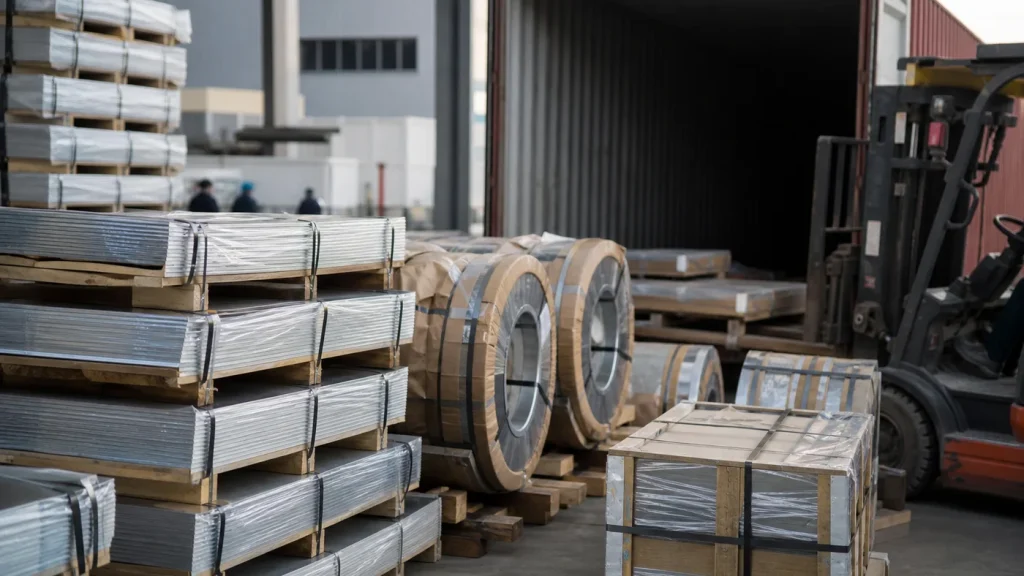
SKU separation also matters. If a container includes several thicknesses, widths, or sheet sizes, bundle marking and pallet planning should allow the receiving warehouse to identify products quickly. Poor separation can create labor cost and inventory mistakes even when the steel quality is acceptable.
Container planning is different for heavy steel products
Steel strip and galvanized sheet can reach container weight limits quickly. A container may still have physical space available while the legal or practical weight limit is already close. Importers should calculate gross weight, pallet weight, coil distribution, loading sequence, and destination unloading capacity before confirming the final shipment plan.
Weight distribution inside the container is also important. Concentrated heavy cargo can stress pallets, container floors, and unloading equipment. The supplier should provide a loading plan that keeps heavy coils or sheet bundles stable and accessible while protecting other hardware products if the shipment is mixed.
For buyers building mixed hardware programs, steel products may need to be planned as anchor cargo. They can use weight efficiently, but they cannot be added casually at the end. The steel portion should be balanced with lighter products, packaging volume, pallet dimensions, and receiving priorities.
A better order sheet reduces supplier ambiguity
A strong steel sourcing order sheet should include product format, material grade or agreed equivalent, thickness, tolerance, width or sheet size, coil ID, coil weight or bundle weight, surface finish, coating requirement, oiling or passivation need, edge condition, packing method, mark requirements, inspection points, and destination unloading notes.
The buyer should also define which items are critical and which items are flexible. For example, a distributor may accept a small change in bundle weight but not in thickness. A stamping buyer may accept a different packing method but not a different edge condition. Clear priorities make supplier communication faster and reduce production mistakes.
When comparing offers, importers should compare specification, tolerance, packing, inspection, and delivery reliability together with price. Two suppliers quoting the same product name may not be quoting the same product reality.
Steel products can strengthen a hardware sourcing program
Steel strip and galvanized sheet can be strong categories for hardware importers because they connect with construction hardware, agricultural tools, repair markets, fabrication users, and local distribution. They can also complement a broader container when the buyer needs practical, repeatable, high-demand industrial products.
But steel products reward disciplined sourcing. The importer needs to control specification, inspection, packing, and container weight before shipment, not after claims appear. A clear order sheet, practical quality checks, and realistic packing plan can turn a heavy commodity-style item into a dependable part of a hardware purchasing program.
For buyers trying to build a more balanced sourcing model, steel products should be selected by use case and handling reality. The best result is not just a cheaper ton price. It is material that arrives protected, matches the buyer's processing or resale needs, and can be reordered with the same controls.